Table of Contents
- 1 The Process of Digestion: How Your Body Breaks Down Food
- 1.1 What Is the Process of Digestion?
- 1.2 The Digestive System: What Organs Are Involved?
- 1.3 The 6 Stages of the Process of Digestion
- 1.4 2. Esophagus – The Food Tunnel
- 1.5 What Happens During Food Breakdown?
- 1.6 When to Consider Digestive Supplements
- 1.7 FAQs: People Also Ask
- 1.8 You Don’t Have to Settle for Daily Digestive Discomfort
The Process of Digestion: How Your Body Breaks Down Food
Every time you eat, your body starts working. Even if you don’t think about it, the process of digestion kicks in the moment food touches your tongue.
From that first bite to your body using nutrients for energy, it is the wonderfully intricate digestion process that makes it all happen.
But when it doesn’t work the way it should, you feel it. Bloating. Stomach pain. Fatigue. Brain fog. Even skin problems and mood changes can be signs that something’s off.
Understanding how digestion works gives you the power to support it naturally.
And sometimes, even small changes, like chewing better, staying hydrated, or adding the right supplements, can make a big difference.
Let’s walk through it, step by step.
What Is the Process of Digestion?
The process of digestion is how your body turns food into something useful. It’s a mix of physical movements (like chewing and muscle contractions) and chemical reactions (like acids and enzymes) that break down food into nutrients your body can absorb.
These nutrients include:
- Carbohydrates (used for energy)
- Proteins (used for muscles, skin, and hormones)
- Fats (used for energy and cell structure)
- Vitamins and minerals (used for hundreds of small jobs in the body)
Once food is broken down, these nutrients move into your blood and get sent to every part of your body. The rest is waste and leaves your body later.
This whole system happens in your digestive system, which we’ll talk about next.
The Digestive System: What Organs Are Involved?
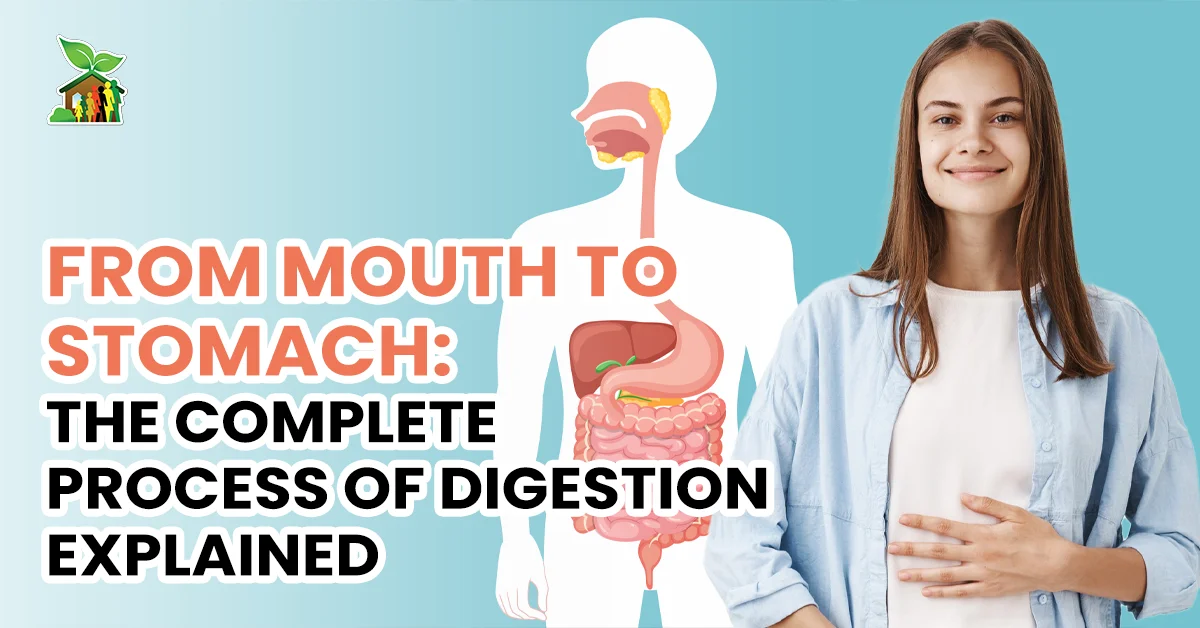
Your digestive system includes several organs that work in a chain. Each one has a job to do:
- Mouth – starts breaking food down by chewing and mixing it with saliva
- Esophagus – the tube that transports food from the mouth to the stomach
- Stomach – uses acid and enzymes to break down proteins
- Small intestine – breaks down food more and absorbs nutrients
- Large intestine – absorbs water and forms waste
- Rectum/anus – removes what’s left
There are also helper organs:
- Pancreas – makes enzymes to break down carbs, proteins, and fats
- Liver – makes bile to help digest fats
- Gallbladder – stores bile
And let’s not forget the trillions of helpful bacteria in your gut that support digestion, immunity, and even mental health. Gut bacteria have become a growing area of research, with studies exploring how the balance of these microbes may be connected to how we feel, both physically and mentally.
You may want to read this simple overview from Harvard Health: Can gut bacteria improve your health?
The 6 Stages of the Process of Digestion
Let’s go step-by-step through the stages of digestion so you can picture what’s really happening inside your body.
1. Mouth – Where Digestion Starts
Digestion begins in the mouth, not the stomach.
When you chew, your teeth break food into smaller pieces, making it easier for the rest of your digestive system to do its job.
At the same time, your saliva starts breaking down carbohydrates with an enzyme called amylase.
This is part of what’s called mechanical and chemical digestion. Mechanical digestion happens as you chew; chemical digestion happens as saliva mixes with food.
According to the National Institute of Diabetes and Digestive and Kidney Diseases (NIDDK), this early stage of digestion is important because it prepares food for the next steps. Even how long you chew can affect how well food breaks down later.
If you skip this part by eating too fast or not chewing enough, your stomach has to work harder, which could leave you feeling heavy or bloated.
2. Esophagus – The Food Tunnel
Once you swallow, the food travels down the esophagus and into the stomach. This happens through a natural squeezing motion called peristalsis.
You don’t have to think about it, it just happens.
3. Stomach – Acid and Enzymes Get to Work
Once food reaches the stomach, it’s held and mixed with gastric juices, a blend of strong acid and enzymes that break it down even further. One of the key enzymes here is pepsin, which starts breaking proteins into smaller pieces so your body can absorb them later.
This stage of digestion is mostly chemical. The food turns into a thick liquid called chyme, which slowly passes into the small intestine.
The stomach’s acid, mostly made up of hydrochloric acid (HCl), plays a critical role in this stage.
According to PubMed, stomach acid isn’t just for digestion; it also helps protect the body by killing potentially harmful bacteria that enter through food
4. Small Intestine – Where Nutrients Are Absorbed
The small intestine is the most important part of digestion. It’s about 20 feet long and lined with tiny finger-like structures called villi that absorb nutrients.
Here, food gets mixed with:
- Enzymes from the pancreas
- Bile from the liver and gallbladder
This is where your body absorbs:
- Sugars from carbs
- Amino acids from protein
- Fatty acids from fats
- Vitamins and minerals
Studies show about 90% of nutrient absorption happens here.
5. Large Intestine – What’s Left?
By the time food reaches the large intestine, most of the nutrients have already been absorbed. What’s left is mostly water, electrolytes, fiber, and waste.
Here, your body absorbs water and minerals, helping to form stool. But this part of digestion isn’t just about waste removal. Your gut bacteria, especially those in the colon, are still hard at work.
According to research published in the International Journal of Molecular Sciences, the large intestine is home to trillions of bacteria that interact with your body in complex ways.
These bacteria break down fibers that weren’t digested earlier and can produce useful byproducts like short-chain fatty acids. These byproducts may influence everything from gut lining health to immune activity.
When this balance is off (from antibiotics, stress, or diet), digestion can feel sluggish, irregular, or just not quite right. That’s why the large intestine isn’t just the end of the line; it’s still an active, important part of the process of digestion.
6. Elimination – The Final Step
Whatever your body doesn’t need is removed as waste. This is the last step in the process of digestion. A healthy gut keeps this process smooth and regular.
When everything is working like it should, this process feels routine. You go when you need to go, and it’s not something you have to think about.
But when your gut is out of rhythm, maybe from too little fiber, not drinking enough water, stress, or an imbalanced gut microbiome, that’s when things can get off track.
Constipation, loose stools, gas, or discomfort after going might all point to that final step needing some extra attention. It’s not always a serious issue but it is your body talking to you.
A healthy gut usually means regular, easy elimination. If things feel off for more than a few days, it might be time to check in with what you’re eating, how hydrated you are, or how your stress levels are doing. Little things matter here, and they tend to add up.
What Happens During Food Breakdown?
Food breakdown means your body is turning food into smaller pieces your cells can use. That includes:
- Chewing in the mouth
- Acid and enzymes in the stomach
- Enzymes and bile in the small intestine
Each nutrient needs different tools:
- Carbs – broken down into sugars like glucose
- Proteins – broken down into amino acids
- Fats – broken down into fatty acids
If you want to better understand how glucose works in the body, especially how it’s affected by what and when you eat, you can watch this helpful breakdown by Jessie Inchauspé, a biochemist known for explaining blood sugar science in a way that actually makes sense: Watch on YouTube
I’ve watched this video myself, and honestly, it cleared up a lot.
She’s also the founder of the Glucose Goddess movement and the author of Glucose Revolution and The Glucose Goddess Method. Her approach is all about learning how your body responds to food, not through restriction, but through small changes that actually make meals more enjoyable.
I think it’s a good starting point if you’ve ever wondered why some meals leave you feeling great and others… don’t.
When to Consider Digestive Supplements
Sometimes, even with a balanced diet, your digestion still struggles. This can be due to aging, past antibiotic use, low stomach acid, or stress. That’s when natural digestive supplements may provide extra support.
Whole Family Products, a trusted source of natural supplements since 1998, offers three gentle yet effective digestive health products that many have found helpful: Alive Probiotics, Digestion Specialist, and ProZyme Plus.
Alive Probiotics
Supports: Gut flora balance, digestion, and immune health
Alive Probiotics by Whole Family Products provides over 5 billion live probiotic organisms per capsule. It includes researched strains such as Lactobacillus and Bifidobacterium, both commonly studied for their digestive and immune system support.
A 2020 study published in Nutrients found that probiotics may help rebalance gut bacteria, especially after antibiotic use, and reduce symptoms like bloating and irregularity.
Potential Benefits of Alive Probiotics:
- Helps restore balance of gut bacteria
- Supports digestion and bowel regularity
- Promotes nutrient absorption
- Supports the immune system naturally
- May help reduce stomach discomfort, gas, and mild cramping
Alive Probiotics is designed for everyday gut maintenance and is ideal for those who want a gentle, natural approach to improving their digestive health.

Digestion Enzyme
Supports: Breakdown of proteins, carbohydrates, fats, and fiber
Digestion Specialist is one of the most complete digestive enzyme supplements available from Whole Family Products. It contains 18 plant-based enzymes, including:
- Amylase – helps digest carbohydrates
- Lipase – supports fat breakdown
- Protease – breaks down proteins into amino acids
- Lactase – helps digest dairy
- Cellulase – aids in breaking down plant fiber
- Bromelain and Papain – enzymes from pineapple and papaya that also support anti-inflammatory function
Research has shown that enzyme supplements can be useful in easing symptoms like bloating, gas, and stomach discomfort in people with poor digestion.
Why Choose Digestion Specialist:
- Especially helpful for those with low stomach acid or sluggish digestion
- May support digestive comfort after high-protein or heavy meals
- Useful for breaking down dairy, gluten, and complex carbs
- Plant-based and gentle enough for daily use
ProZyme Plus from Whole Family Products
Supports: Complete digestive care with enzymes, probiotics, and prebiotics
ProZyme Plus is a 3-in-1 digestive supplement from Whole Family Products, offering:
- Digestive enzymes – to help break down fats, carbs, and proteins
- Probiotics – to support healthy gut flora
- Prebiotics – to feed and maintain good bacteria
It’s especially helpful for those who experience:
- Gas or bloating
- Irregular bowel movements
- Heartburn or occasional acid discomfort
- Digestive upset during travel or after antibiotic use
A 2025 review published in Frontiers in Nutrition highlighted how both probiotics and digestive enzymes play an important role in maintaining gut function. According to the authors, combining these elements may improve symptoms of gas, bloating, and discomfort, particularly in individuals with mild digestive issues.
ProZyme Plus May Help With:
- Daily support for digestion and nutrient absorption
- Combating digestive imbalances due to stress or poor diet
- Supporting a healthy immune response through the gut
- Providing a full-spectrum solution in one capsule
FAQs: People Also Ask
What causes poor digestion?
There are several possible causes, including not chewing food well, low stomach acid, enzyme deficiency, gut bacteria imbalance, stress, and eating too quickly. As people age, they may also naturally produce fewer digestive enzymes, which can slow the process of digestion.
How long does digestion take?
For most people, digestion takes between 24 to 72 hours from start to finish. Food stays in the stomach for about 2–4 hours, then passes through the small intestine in 4–5 hours, and finally moves into the large intestine for further absorption and elimination.
Can digestion problems affect energy levels or mood?
Yes. When your body doesn’t properly absorb nutrients, it can result in fatigue or nutrient deficiencies. Because most of your serotonin (a chemical linked to mood) is produced in the gut, an unhealthy digestive system can also contribute to low mood or irritability.
Is it safe to take probiotics or enzymes every day?
For most people, yes. Supplements like Alive Probiotics, Digestion Specialist, and ProZyme Plus from Whole Family Products are made for daily use to support overall digestive function. If you have concerns about medications that might interact with these supplements, check with your holistic provider.
You Don’t Have to Settle for Daily Digestive Discomfort
If your digestion hasn’t felt quite right lately, that’s something worth noticing. Whether it’s how you feel after eating or how often you’re dealing with discomfort, it matters.
And even if it’s been going on for a while, it doesn’t mean it has to stay that way. Restoring healthy digestion can often happen quickly with the right foods, supplements and lifestyle.
Sometimes your body is doing the best it can, but it’s been through a lot, such as stress, antibiotics, processed foods, or years of pushing through without rest. Giving it a bit of extra attention, whether through food, daily habits, or thoughtful choices, can be a good place to begin.
Some people look into natural products when they’re trying to take a gentler approach. Whole Family Products offers options like enzymes, prebiotics and probiotics that many include in their routines when they’re working on feeling more balanced with digestion.
Everyone’s body is different, so it’s always about finding what feels right for you.
If you have concerns about medications that might interact with supplements, always check with your holistic provider.