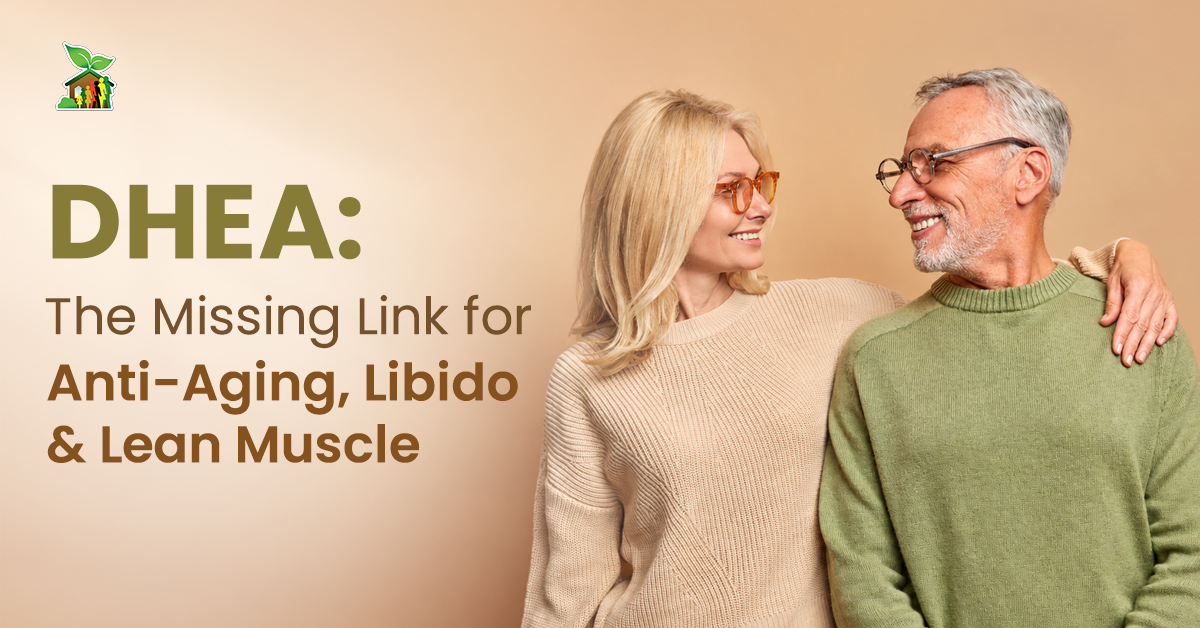
DHEA: The Missing Link for Anti-Aging, Libido & Lean Muscle
If you are in your 30s or 40s and something just feels off, your energy lower, your drive quieter, your body not responding the way it used to, I want you to know about a hormone most people have never heard of. It is called DHEA, dehydroepiandrosterone, and it starts declining earlier than most people realize.
DHEA is produced by your adrenal glands and is the raw material your body uses to make both testosterone and estrogen. When levels are healthy, a lot of things tend to work the way they should. When they drop, you may notice changes that are hard to pin down but very real. If you’re wondering how declining DHEA levels may show up, learn more about the symptoms of low DHEA in men and women.
I pay close attention to this one. It is part of why I created our DHEA cream.
What Is DHEA Cream?
DHEA (dehydroepiandrosterone) is a steroid hormone produced naturally by your adrenal glands. It sits near the top of your hormone chain and acts as a raw material your body uses to make testosterone and estrogen, among other things. It is also a neurosteroid, which means it has a direct role in how the brain functions too.
A DHEA cream is a topical version of this hormone. Instead of swallowing a pill that has to pass through your digestive system and liver before reaching your bloodstream, you apply the cream directly to your skin. The DHEA absorbs transdermally, through the skin, and enters the bloodstream without that first-pass liver metabolism.
Why DHEA Levels Matter After Your 30s
Here is what most people do not know: DHEA levels peak in your mid-20s, and then they drop by roughly 2 to 5 percent every year after that. According to a detailed review published in the NCBI Bookshelf on Adrenal Androgens and Aging, by the time a woman reaches menopause, her DHEA level has already declined by about 60 percent. By the eighth or ninth decade of life, we are looking at 80 to 90 percent below peak levels.
Researchers call this decline “adrenopause” and it happens in both men and women at roughly similar ages. Most people are never told this is happening. They are just told they are getting older.
Studies published in PMC have associated low DHEA levels with reduced immune function, lower bone density, changes in body composition, and shifts in mood and cognitive performance. When DHEA goes down, the downstream hormones it feeds, testosterone and estrogen, also feel that pressure. This is why the DHEA cream benefits I get asked about touch so many different areas of health.
What the Research Says About DHEA Cream Benefits
Skin and anti-aging support. A pilot study published in PubMed looked at postmenopausal women who applied topical DHEA cream for four months. The researchers found improvements in skin brightness and epidermal thickness, and noted that hormone-related skin atrophy showed measurable changes. That is one of the DHEA cream benefits that surprises people most.
Libido and sexual function. This is the most common reason people reach out to me. A study published in the European Neuropsychopharmacology journal found that DHEA showed a significant beneficial effect on arousal in women with low sexual desire. A review of DHEA and female sexual health published in Fertility and Sterility reported that women over 70 who received DHEA supplementation experienced increases in libido and sexual satisfaction.
Lean muscle and body composition. A study on DHEA and muscle strength in aging men and women found that DHEA may influence anabolic growth factors and muscle-related outcomes. A review of DHEA and its effects on the body discusses research on DHEA supplementation, hormone levels, and age-related changes. However, findings on its effects vary across studies, and further research is needed.
Cream vs. Capsules: An Honest Look
I am not going to tell you that one method is always better than the other. A study on bioavailability comparing oral and percutaneous DHEA found that hormone levels remain steadier throughout the day with topical application. Oral DHEA gets metabolized through the liver first, which can mean less predictable conversion. With a topical hormone balance cream, the DHEA absorbs gradually and tends to feel gentler and more consistent. Some people do well with capsules. But if pill-form supplements tend to hit hard and then drop off, a cream is worth trying.
How Our DHEA Cream Fits In
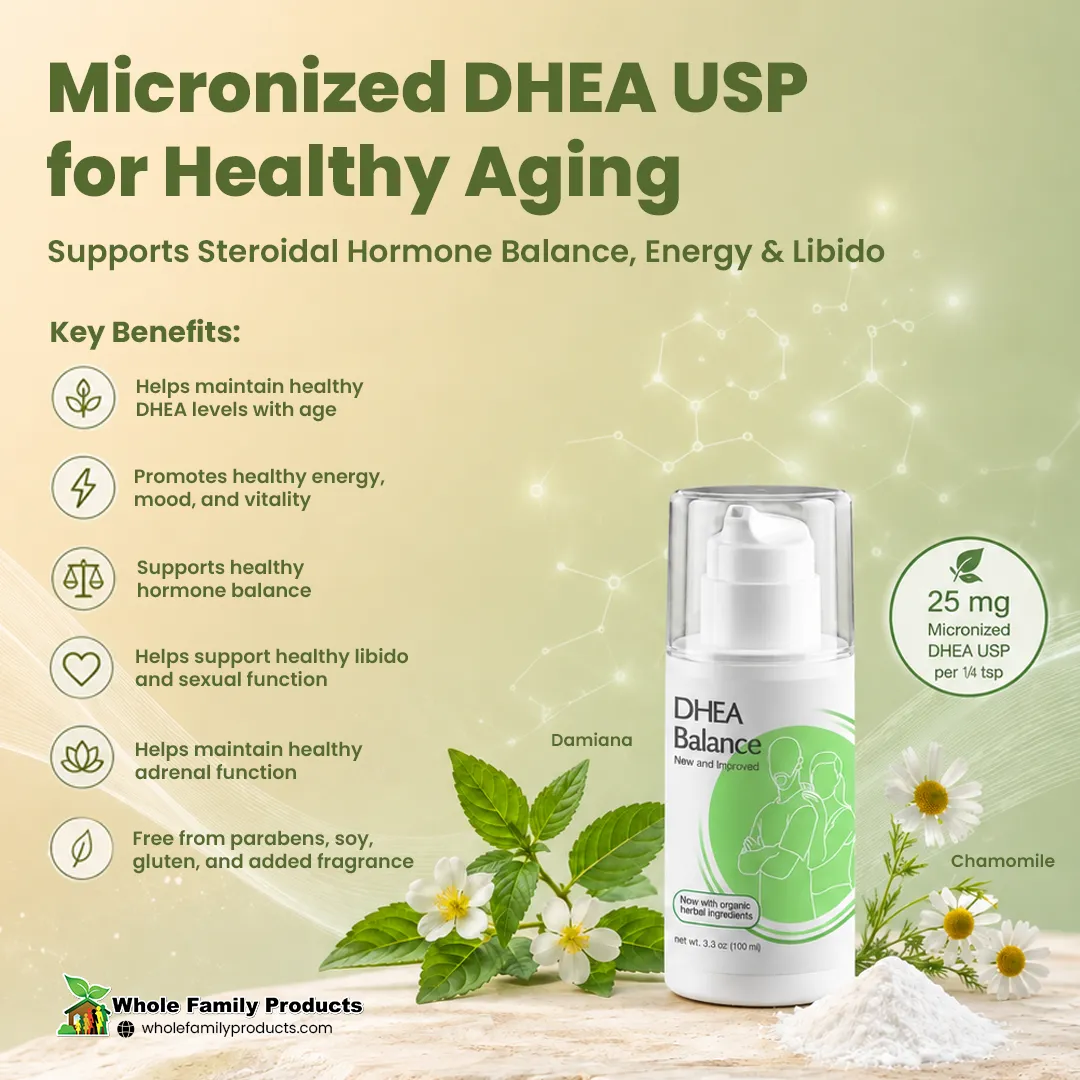
Our DHEA Balance Cream is formulated without parabens, gluten, soy, or artificial fragrance. It uses a base of natural oils and delivers DHEA transdermally so your body can use it in its own time and according to its own needs.
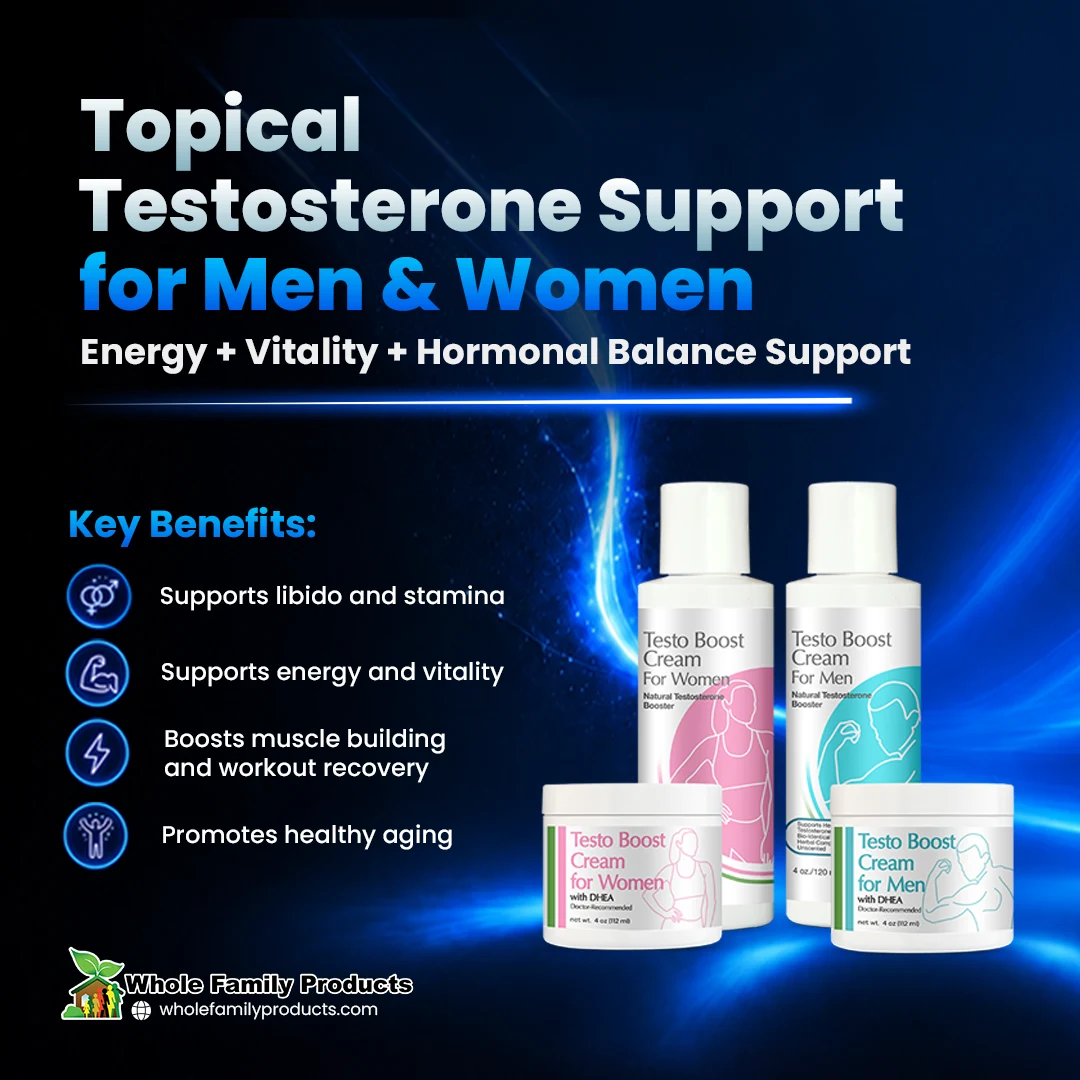
For men and women who are specifically looking for broader testosterone support alongside DHEA, our Testo Boost Cream pairs DHEA with carefully chosen herbal extracts and uses the same transdermal delivery approach. It comes in two versions, one for women and one for men, because the hormonal needs really are different.
Both products are formulated using a cold-process technique to protect the potency of every ingredient. That matters more than most people realize when it comes to hormone creams.
Frequently Asked Questions About DHEA Cream
1. What does DHEA cream actually do for women?
In women, DHEA is a precursor to both estrogen and testosterone. Studies have looked at its potential role in supporting libido, sexual arousal, skin quality, mood, and energy as hormone levels shift with age. Research also suggests it may help support bone density, particularly in postmenopausal women. Results vary by individual, so it is worth monitoring how your body responds.
2. Is DHEA cream good for men too?
Yes. Men also experience declining DHEA levels with age, which affects testosterone production, body composition, and energy. Studies on aging men show that DHEA supplementation may support lean muscle mass, IGF-1 levels (a growth factor), and overall well-being. That said, men with concerns about prostate health should check with a holistic provider before starting DHEA. You can also read our guide on how to improve prostate health naturally for more information.
3. Can a DHEA cream really help with libido?
Research suggests DHEA may influence female sexual function, partly because the body can convert it into testosterone and other sex hormones. A review of DHEA and female sexual function examined evidence on libido and sexual well-being, but findings from clinical trials were inconsistent. The effect appears stronger in women than in men based on current clinical data, though the reasons for that gender difference are still being studied.
4. How do you use a DHEA cream?
It is typically applied to skin areas with good blood flow and minimal hair. The inner wrist, upper chest, inner thigh, or neck are common choices. Rotating application sites helps avoid skin saturation. Many people follow a cycling approach: 21 days on, 7 days off.
5. How long before you notice DHEA cream benefits?
This depends on the person. Some notice changes in energy and mood within a few weeks. Skin and body composition changes typically take longer, often two to three months of consistent use. Hormone support is not an overnight process.
6. Is topical DHEA safe for long-term use?
Starting at a low dose and monitoring how you feel is the standard approach. Because DHEA affects hormone levels, it is not something to use casually at high doses for extended periods without awareness of how your body is responding. If you have any concerns about how DHEA may interact with medications you are currently taking, please check with your holistic provider.
Start Where You Are
Your body works hard to keep everything in balance. When a hormone like DHEA starts to decline, it does not always announce itself loudly. It just quietly pulls back, and you feel the difference over time.
The good news is that paying attention to it is not complicated. Supporting your DHEA levels, eating well, moving your body, and getting decent rest go a lot further than most people expect. Small, consistent things add up.
If you want to start with our DHEA Balance Cream, it may be a good option to explore. If you’re also looking for progesterone creams, you can browse our natural bioidentical hormone creams to find an option that fits your needs.
Want to learn more about DHEA? Visit our blog for more articles on hormones, health, and related topics.