Table of Contents
- 1 New Food Pyramid Explained
- 2 So What Is the New Food Pyramid?
- 3 Why the American Food Pyramid Was Updated
- 4 Protein in the New Food Pyramid: Why Variety Matters
- 5 Healthy Fats Deserve Their Redemption
- 6 Carbohydrates in the New Food Pyramid: Quality Comes First
- 7 Why Digestion Is the Quiet Missing Piece
- 8 Vegetables, Fiber, and the Gut Connection
- 9 Vitamin D, K2, and the Balanced Diet Pyramid
- 10 The Role of Blood Sugar Balance in Healthy Eating
- 11 Frequently Asked Questions About the New Food Pyramid
- 12 My Takeaway
New Food Pyramid Explained
Probably, we were all a little surprised to see changes to the food pyramid again. The last big shift was in 2011, when the familiar triangle disappeared and MyPlate took over, turning nutrition advice into a portioned dinner plate instead of stacked food groups.
The older pyramid focused heavily on grains at the base, encouraged low-fat everything, and didn’t always make it easy to tell the difference between whole foods and heavily processed ones. Over time, that approach started to feel – dated. It worked on paper, but it didn’t always line up with how people actually eat or what newer nutrition research was showing.
Fast forward to now. According to USA Today, the newly released U.S. eating pyramid, introduced under Health Secretary Robert F. Kennedy Jr., brings the focus back to something much simpler: real food. Rather than strict servings or rigid rules, this updated model acts more like a healthy eating guide, emphasizing vegetables, fruits, quality proteins, and healthy fats while quietly nudging ultra-processed foods out of the spotlight. If you ask me, it’s about time.
That change opens the door to a better understanding of what the new food pyramid actually looks like and why its structure matters. So let’s take a closer look at what’s changed, what’s stayed familiar, and how this updated approach is meant to guide everyday eating in a more practical way.
So What Is the New Food Pyramid?
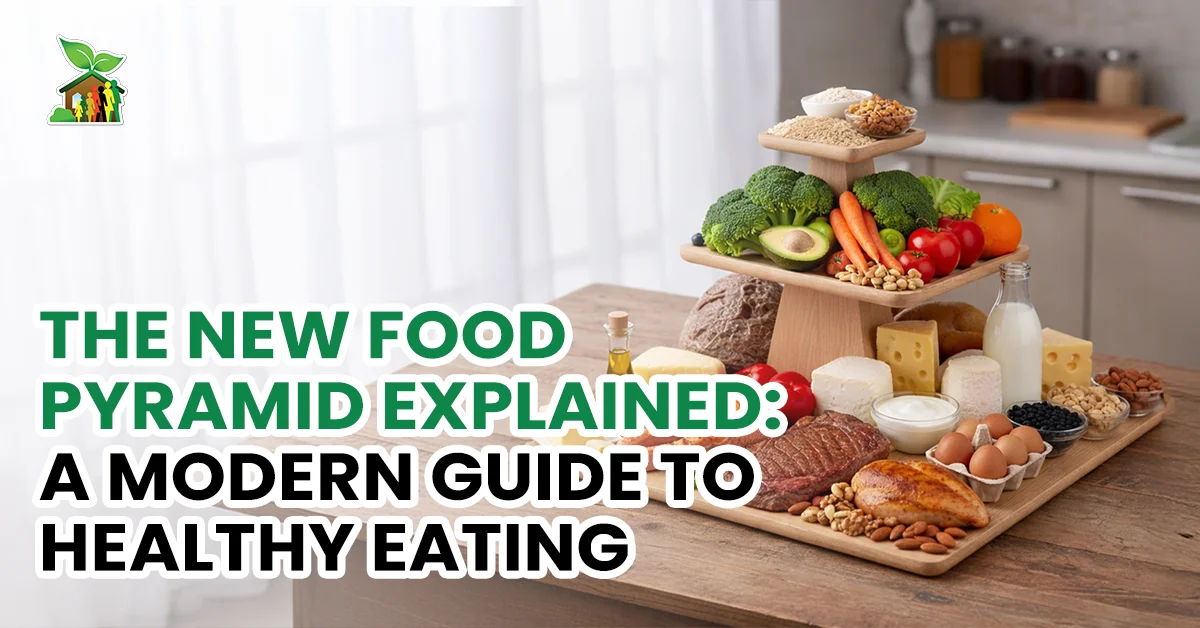
The new food pyramid is a visual guide that focuses on food proportions rather than strict daily targets.
The idea is to help people build meals that feel nourishing and realistic, without turning eating into a numbers game. Instead of counting servings or calories, the emphasis is on choosing foods that support the body consistently over time. For some it actually will mean – aging backwards.
This updated approach aligns with the U.S. Department of Agriculture’s recent announcement calling for a renewed focus on real, minimally processed foods as the foundation of national nutrition guidance.
According to the USDA’s January 2026 press release, the goal of this policy reset is to “put real food back at the center of health” by prioritizing whole foods over highly processed options.
Rather than promoting one-size-fits-all rules, the USA’s new food pyramid reflects this shift by encouraging balance, variety, and food quality.
Key features of the updated model include:
- Greater emphasis on vegetables and fruits
Vegetables and fruits form the foundation of the pyramid, reflecting their role as primary sources of fiber, vitamins, minerals, and plant compounds. - Balanced inclusion of protein from varied sources
Instead of relying on a single protein category, the pyramid encourages a mix of plant and animal sources, supporting flexibility and nutrient diversity. - Recognition of healthy fats as essential
The updated pyramid acknowledges that fats from whole-food sources play an important role in nutrient absorption and overall nourishment, rather than treating fat as something to avoid.
Overall, the new food pyramid mirrors the USDA’s broader effort to simplify nutrition guidance and refocus attention on everyday foods people recognize and use, foods that support health without unnecessary complexity.
Why the American Food Pyramid Was Updated
The original American food pyramid emphasized carbohydrates, particularly grains, as the foundation of the diet.
Over time, researchers observed that this approach often led to increased intake of refined carbohydrates and added sugars. Eventually, overconsumption of empty carbs and low fiber leads to a rise in insulin resistance and ultimately the epidemic of Type II Diabetes and other diet related diseases.
Subsequent studies showed that diets high in ultra-processed foods were associated with poorer nutritional quality and metabolic concerns.
As a result, nutrition guidance shifted toward:
- Whole food sources
- Fiber-rich vegetables
- Balanced macronutrients
- Reduced emphasis on low-fat processed products
The updated pyramid reflects this shift, offering guidance that aligns more closely with current dietary research.
Protein in the New Food Pyramid: Why Variety Matters
Okay, let’s talk protein — because this is one area where the new guidelines actually made a significant move, and I think it’s worth paying attention to.
The 2025–2030 Dietary Guidelines raised the recommended daily protein intake to 1.2 to 1.6 grams per kilogram of body weight CNN, which is a meaningful jump from what we were told before. And honestly? It’s about time. Nutrition experts note that the new guidelines place greater emphasis on animal-derived protein sources, where previous versions leaned more plant-forward.
Here’s something I want you to understand, because it changes how you think about your meals. Not all protein works the same way in your body. Complete proteins give you all nine essential amino acids, the ones your body cannot manufacture on its own. Incomplete proteins give you some but not all of them. Neither is bad. But when you eat a mix of both throughout the day, your body gets everything it needs to build, repair, and function well.
Research through the National Institutes of Health confirms that spreading your protein across meals, rather than loading it all at dinner, supports better use of those nutrients over time. So think of it less as a single daily target and more as something you’re consistently feeding your body all day long.
So what does that actually look like in a real kitchen? Here’s what I’d put on your grocery list:
From animal sources:
- Eggs — honestly one of the most complete and affordable foods you can eat; full of choline, B vitamins, and fat-soluble nutrients that so many people are running low on
- Poultry (chicken, turkey) — easy to cook in batches, endlessly versatile, and genuinely lean
- Fish and seafood (salmon, sardines, tuna, shrimp) — don’t skip these; the omega-3s alone make them worth eating at least twice a week
- Grass-fed beef and lamb — good protein, yes, but also a natural source of iron, zinc, and B12 that’s hard to match from plants alone
- Greek yogurt and cottage cheese — quick, practical, and they pull double duty as a source of calcium and gut-friendly cultures
From plant sources:
- Lentils — this one is a personal favorite because they give you protein and fiber in the same bite, which does wonders for blood sugar stability
- Chickpeas and black beans — filling, affordable, and so easy to throw into soups, salads, or grain bowls
- Edamame — one of the very few plant foods that is actually a complete protein on its own; keep a bag in the freezer
- Tempeh and tofu — don’t be intimidated by these; season them well and they absorb flavor beautifully
- Nuts and seeds (almonds, pumpkin seeds, hemp seeds) — great for snacking or adding to meals when you need a little extra protein with some healthy fat alongside it
Healthy Fats Deserve Their Redemption
For a long time, fat was treated like the enemy.
Low-fat labels were everywhere, and many people were taught to cut fat wherever possible. Looking back, it’s easy to see how that advice missed the bigger picture.
The new food pyramid finally gives healthy fats the credit they deserve. Instead of being something to avoid, fats are now recognized as an essential part of a balanced diet, one that supports how the body actually works day to day.
Healthy fats play a role in several key functions, including hormone production, brain health, and the absorption of fat-soluble vitamins. Without enough dietary fat, the body struggles to fully use vitamins A, D, E, and K, no matter how nutritious the rest of the diet may be. And don’t forget the needs of the brain when it comes to omega 3 fats as well.
Vitamin D is a good example. Even though it’s widely discussed and added to many foods, deficiency remains common in the United States. One reason is that vitamin D needs fat to be properly absorbed in the body. When meals are too low in fat, absorption can fall short, even if intake looks adequate on paper.
This is why the updated food pyramid emphasizes quality over avoidance, encouraging fats from whole food sources like olive oil, nuts, seeds, avocados, and fatty fish. Rather than fearing fat, the new model encourages using it wisely, in amounts that support nourishment, satisfaction, and long-term health.
So let’s talk about what “good fat” actually means when you’re standing in the kitchen. It means whole food sources, not processed, not refined, not something that has to go through a factory to become what it is. Here’s my list:
- Avocados — monounsaturated fat, fiber, potassium, B vitamins all in one creamy package; add them to everything
- Extra virgin olive oil — this is the gold standard for a reason; pour it over vegetables, use it on salads, drizzle it on your eggs; it’s been studied extensively for heart health and it delivers
- Fatty fish (salmon, mackerel, sardines, herring) — if you’re only going to add one thing to your diet for brain and heart health, make it fatty fish twice a week; the EPA and DHA in these fish are genuinely hard to replicate from other sources
- Walnuts — unique among nuts because they’re actually a meaningful plant source of omega-3s; grab a small handful as a snack instead of something processed
- Almonds and macadamia nuts — rich in monounsaturated fats and satisfying in a way that keeps you from reaching for something that won’t serve you nearly as well
- Chia seeds and flaxseeds — easy to stir into oatmeal, yogurt, or a smoothie; you won’t taste them but your body will notice them
- Hemp seeds — a complete protein and a healthy fat source in one little seed; sprinkle them on salads, bowls, or smoothies
- Whole eggs — please stop throwing away the yolk; that’s where most of the fat-soluble nutrients live
- Full-fat plain dairy (Greek yogurt, quality cheese) — the new Dietary Guidelines welcome full-fat dairy as part of a nourishing diet, Food Safety which is a long-overdue correction from decades of low-fat messaging.
Choose fat from food you recognize. That’s really the whole message here.
Carbohydrates in the New Food Pyramid: Quality Comes First
Let me clear something up right away, because I hear this confusion all the time. The new food pyramid does not tell you to stop eating carbohydrates. That’s not what’s happening here. What it does say — loudly and clearly, is that the type of carbohydrate you choose makes all the difference. And once you understand why, you’ll never look at a piece of white bread the same way again.
So let’s talk about what complex carbohydrates actually are, because the term gets used constantly without anyone really explaining it.
Complex carbohydrates are built from longer chains of sugar molecules. That structure is what makes them work differently in your body. Because those chains take longer to break down, your blood sugar rises gradually instead of spiking and crashing. You feel fuller for longer. Your energy is steadier throughout the day. And here’s the best part, complex carbs naturally come packaged with fiber, vitamins, and minerals that your body genuinely needs.
Simple carbohydrates do the opposite. White bread, packaged crackers, sugary cereals, pastries, sweetened drinks, these break down fast, spike your blood sugar quickly, and leave you hungry again before you know it. The 2025–2030 Dietary Guidelines take a clear position on this, prioritizing whole, fiber-rich grain options while calling for a significant reduction in highly processed, refined carbohydrates like white bread.
And fiber is a big piece of this puzzle. Nebraska Medicine’s nutrition therapists point out that research supports poor health outcomes in people who aren’t meeting 25 to 30 grams of fiber per day Nebraska Medicine and even higher intake is linked to reduced chronic disease risk. Most people aren’t anywhere close to that number, which is exactly why the pyramid emphasizes these foods so strongly.
So what does a complex carbohydrate actually look like on your plate? Let me show you:
- Non-starchy vegetables — leafy greens, broccoli, cauliflower, zucchini, bell peppers, carrots; these are your absolute foundation; eat them in abundance at every meal if you can
- Sweet potatoes and winter squash — yes, these are starchy, but they still carry fiber, beta-carotene, and potassium; they’re a world apart from a bag of chips
- Lentils, black beans, chickpeas, and kidney beans — I cannot say enough good things about legumes; they’re fiber-rich, protein-rich, slow-digesting, and incredibly affordable; if you’re not eating them regularly, start now
- Whole fruits (berries, apples, pears, citrus) — the fiber in whole fruit is what separates it from fruit juice; it slows down sugar absorption and delivers antioxidants your body knows how to use
- Oats — not the instant sweetened kind in a packet, but real rolled or steel-cut oats; the beta-glucan fiber in oats has been well-studied for healthy cholesterol support and sustained energy
- Whole grains in moderate portions — quinoa, brown rice, barley, farro; the new pyramid specifies that grains can absolutely be part of a real food diet when eaten in whole or traditionally prepared forms, with refined and packaged grain products to be limited; the key word is whole, meaning the bran and germ are still intact, where all the fiber and nutrients actually live
The 2025–2030 guidelines focus on whole grains while sharply reducing refined carbohydrates USDA, not because carbs are bad, but because refining strips away exactly what made the original food worth eating.
Here’s the way I think about it: complex carbohydrates work with your body. Refined carbohydrates work against it. Once you start making that distinction at the grocery store, your whole relationship with food starts to shift, and that’s exactly what this updated pyramid is designed to do.
Why Digestion Is the Quiet Missing Piece
Here’s something that doesn’t get talked about enough: you can eat the “right” foods and still not feel your best.
Why? Because digestion and absorption matter.
Research has shown that factors like stress, aging, and modern diets can influence how efficiently nutrients are broken down and absorbed.
This is where digestive enzymes come into the conversation, not as magic fixes, but as support.
Products like ProZyme Plus fit into the modern pyramid because they’re about helping the body use the food you’re already eating. When digestion works better, the whole system benefits.
Vegetables, Fiber, and the Gut Connection
Fiber feeds beneficial gut bacteria. Those bacteria influence:
- Nutrient metabolism
- Immune signaling
- Inflammatory balance
There’s a growing body of research showing how closely gut health is tied to overall wellness.
Plant compounds, especially polyphenols, play a role here too.
That’s one reason Green Tea Extract often comes up in nutrition research. Its compounds, including EGCG, have been studied for antioxidant activity and metabolic support.
Again, this isn’t about replacing vegetables, it’s about supporting the systems that make plant foods beneficial in the first place.
Vitamin D, K2, and the Balanced Diet Pyramid
This is where the balanced diet pyramid and smart supplementation overlap.
Vitamin D3 has been studied for its role in calcium absorption and immune balance. Vitamin K2 has been researched for helping guide calcium where it belongs.
They work in synergy, which is why Vitamin D3 + K2 Complex makes sense in a modern nutrition routine, especially for people who don’t get consistent sun exposure or fermented foods.
This isn’t about fixing a problem. It’s about supporting normal physiological processes the body already uses.

The Role of Blood Sugar Balance in Healthy Eating
Stable blood sugar levels support consistent energy, focus, and appetite regulation. The new food pyramid indirectly supports this by encouraging meals that include:
- Protein
- Fiber
- Healthy fats
These nutrients slow digestion and help reduce rapid glucose spikes.
Research has shown that meals containing balanced macronutrients may support more stable post-meal blood sugar responses.
Plant compounds such as those found in Black Cumin Seed have been studied for their antioxidant properties and potential metabolic support, making them a complementary addition to a balanced eating plan.
Frequently Asked Questions About the New Food Pyramid
Is the new food pyramid different from MyPlate?
Yes. While MyPlate focuses on meal composition, the new food pyramid emphasizes dietary patterns over time rather than single meals.
Does the modern food pyramid eliminate any foods?
No. It encourages moderation and prioritization rather than elimination.
Is the USA’s new food pyramid suitable for older adults?
Yes. Its focus on nutrient density, protein quality, and digestion makes it adaptable for aging populations.
Can supplements replace food?
No. Supplements are intended to support nutrition, not replace whole foods.
Is this pyramid based on scientific research?
Yes. The updated model reflects findings from large-scale dietary and nutritional studies published through NIH and related research institutions.
My Takeaway
The new food pyramid isn’t revolutionary, but it is realistic. It encourages better food choices without shame. It leaves room for support when life isn’t perfect. And it aligns with what research has been quietly saying for years.
When paired with whole foods, mindful eating, and thoughtful supplementation, like ProZyme Plus, Green Tea Extract, Black Cumin Seed, and Vitamin D3 + K2 Complex, it becomes something families can actually live with.
If you’re building a routine around better food choices, explore Whole Family Products for natural supplements designed to support, not override, the body’s natural processes.
If you have concerns about medications that might interact with these supplements, check with your holistic provider.