
Table of Contents
- 1 The Benefits of Vitamin D3 and K2: Why You Need This Nutrient Combo in Your Life
- 2 How Vitamin D3 and K2 Work Together
- 3 Key Benefits of Vitamin D3 and K2
- 4 How to Spot a Vitamin D3 or K2 Deficiency
- 5 Getting D3 and K2 From Food vs. Supplements
- 6 Why Supplements Fill the Gaps
- 7 How Much D3 and K2 Should You Take?
- 8 FAQs About Vitamin D3 and K2
- 9 Are You Getting Enough D3 and K2?
- 10 A Simple Step for Better Health
The Benefits of Vitamin D3 and K2: Why You Need This Nutrient Combo in Your Life
Most people know vitamin D as the “sunshine vitamin,” but did you know it works best when paired with vitamin K2? Research from the International Journal of Endocrinology shows that vitamin D3 and K2 benefits go far beyond just bone health; they support your heart, immune system, and even mood. Yet, many folks take vitamin D alone, missing out on this powerful duo.
If you’ve ever wondered why some people still feel fatigued or achy despite taking vitamin D, the answer might be a lack of K2. These two nutrients work together to direct calcium where it’s needed (like bones and teeth) and away from where it shouldn’t build up (like arteries).
How Vitamin D3 and K2 Work Together
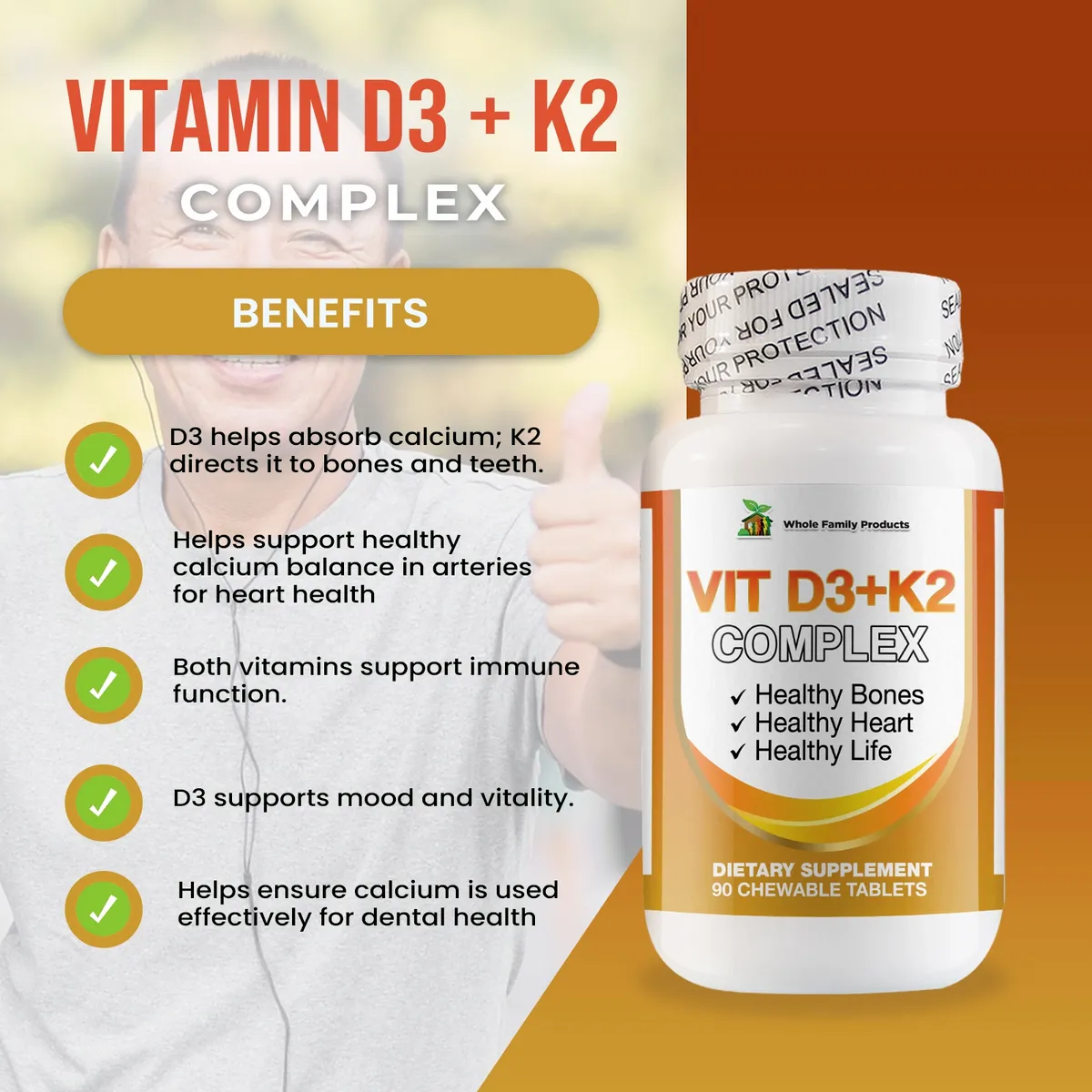
Vitamin D helps your body absorb calcium, but without enough K2, that calcium might not end up in the right places. Think of K2 as a traffic cop, it guides calcium into bones and teeth while keeping it out of soft tissues.
A study published in the Journal of Nutrition and Metabolism (2019) found that taking vitamin D3 and K2 together improved bone strength and heart health markers better than D3 alone. Another study in Osteoporosis International (2015) showed that postmenopausal women who took both nutrients had better bone density.
This synergy is why many natural health practitioners recommend a combined supplement, like Whole Family Products’ Vitamin D3+K2 chewables, instead of taking them separately.
Key Benefits of Vitamin D3 and K2
1. Stronger Bones and Teeth
Vitamin D benefits include helping your body use calcium, but K2 activates proteins that bind calcium to bones. Without enough K2, calcium might not fully benefit your skeleton.
A narrative review published by Pubmed Central found that people taking both D3 and K2 had significantly lower fracture rates compared to those taking D3 alone. If you’re prone to stiffness or have a family history of osteoporosis, this combo is worth considering.
2. Heart Health Support
Research in Nutrients (2019) suggests that K2 helps prevent calcium buildup in arteries, which is crucial for long-term heart health. Pairing it with D3 ensures you’re absorbing calcium properly while keeping arteries clear.
Arterial stiffness is a silent issue many don’t notice until later in life. K2’s role in keeping calcium out of soft tissues is a game-changer. For example, cultures that eat fermented foods (rich in K2), like traditional Japanese natto, tend to have lower rates of heart disease.
3. Immune System Boost
Vitamin D is famous for immune support, but K2 plays a role too. Nutrition Diagnostics included Vitamin K2 in their steady supply of essential nutrients because it helps regulate inflammation, making this combination especially powerful during cold and flu season. Many people ramp up vitamin D in winter, but adding K2 year-round supports balanced immunity.
4. May Help with Ganglion Cysts
Some holistic practitioners suggest that ganglion cyst vitamin deficiency could be tied to low D3 and K2 levels, though more research is needed. These nutrients support connective tissue health, which might explain why some people see improvements. In online forums, some users report fewer cysts after increasing D3+K2 intake. Always pair supplements with a whole-food approach for best results.
How to Spot a Vitamin D3 or K2 Deficiency
Vitamin D and K2 deficiencies often creep up silently, but your body does give subtle clues. Here’s what to watch for:
Signs You Might Need More Vitamin D3
Fatigue that lingers even after good sleep, frequent colds that take forever to shake, winter blues that feel heavier than usual, and muscle weakness (like struggling with grocery bags you used to carry easily) can all hint at low D3 levels.
Signs You Might Need More Vitamin K2
Stiff arteries (which show up on tests like coronary artery calcium scans), easy bruising from minor bumps, or dental issues like sudden cavities despite brushing and flossing regularly might mean your body’s craving K2.
Important Note
While blood tests can check your D3 levels, K2 is trickier to measure. If you suspect a shortage but aren’t sure, trying a quality D3+K2 supplement for 2-3 months while tracking how you feel often gives clearer answers than lab work alone.
Getting D3 and K2 From Food vs. Supplements
Natural Food Sources of Vitamin D3
Fatty fish like wild-caught salmon and sardines pack a solid D3 punch, while pastured egg yolks and fortified foods (like some milks and cereals) offer smaller amounts.
Natural Food Sources of Vitamin K2
Fermented foods are K2 kings, think natto (a Japanese soybean dish), unpasteurized sauerkraut, and aged cheeses. Grass-fed butter and organ meats like liver also deliver K2, but you’d need to eat them regularly.
Why Supplements Fill the Gaps
Between picky eaters avoiding liver and most grocery stores lacking natto, getting enough K2 from food alone is tough. Even when you do eat these foods, modern farming practices have depleted soils of key nutrients, making supplements a practical backup.
For easy options, Whole Family Products offers Vitamin D3+K2 chewables for precise dosing.
How Much D3 and K2 Should You Take?
Vitamin D3 Dosage Guidelines
Aim for 1,000–5,000 IU daily, adjusting based on your current levels (sun exposure, skin tone, and diet all play roles). Those with very low levels may need short-term higher doses under guidance.
Vitamin K2 (MK-7) Dosage Guidelines
100–200 mcg per day is ideal for most adults. Unlike D3, K2 doesn’t build up in your body the same way, so consistent daily intake matters more than mega-dosing.
Safety Considerations
Since vitamin D is fat-soluble, taking extremely high doses long-term without monitoring isn’t wise. As for K2, while it’s safe for most, those on blood-thinning medications should check with a holistic provider before starting, as K2 supports healthy clotting.
FAQs About Vitamin D3 and K2
Do vitamin D3 and K2 benefits include better skin?
Yes! Vitamin D supports skin cell repair, while K2 helps maintain elasticity. A Dermato-Endocrinology study found that D3 may help with skin hydration and reducing irritation.
Can this combo improve hair health?
Possibly. Vitamin D aids hair follicle function, and K2 supports circulation—both key for healthy hair growth.
Do vitamins D3 and K2 boost testosterone?
A Hormone and Metabolic Research (2011) study found that men with higher vitamin D levels had healthier testosterone levels. K2’s role in hormone balance might add to this effect.
Are You Getting Enough D3 and K2?
Modern diets and indoor lifestyles leave many people deficient. Fatty fish, egg yolks, and fermented foods like natto provide some K2, but most folks need a supplement to hit optimal levels.
A Simple Step for Better Health
The Vitamin D3 and K2 benefits are too good to ignore—stronger bones, a healthier heart, and even better immunity. If you’re already taking vitamin D, adding K2 could make a real difference in how you feel.
Check out the Whole Family Products Shop’ D3+K2 options to find the right fit for your routine. If you have any concerns about medications that might interact with these supplements, chat with your holistic provider to personalize your approach.