Table of Contents
- 1 Undiagnosed PCOS: Signs, Risks, and Early Detection
- 2 What Are Common PCOS Symptoms That Often Go Unnoticed?
- 3 Why Do Some Women With PCOS Go Undiagnosed for Years?
- 4 Can Blood Tests Alone Detect PCOS?
- 5 Can Someone Have PCOS Without Having Ovarian Cysts?
- 6 Is PCOS Inherited or Genetic?
- 7 Is PCOS the Same as Infertility?
- 8 What Are the Early Signs of PCOS That Are Often Overlooked?
- 9 Why Fertility Concerns Often Appear Later With Undiagnosed PCOS
- 10 Can Managing PCOS Early Improve Long-Term Fertility Outcomes?
- 11 When Is IVF Considered for Women With PCOS?
- 12 Where Natural Support Often Fits in Early PCOS Patterns
- 13 Why Listening to Early Signals Matters
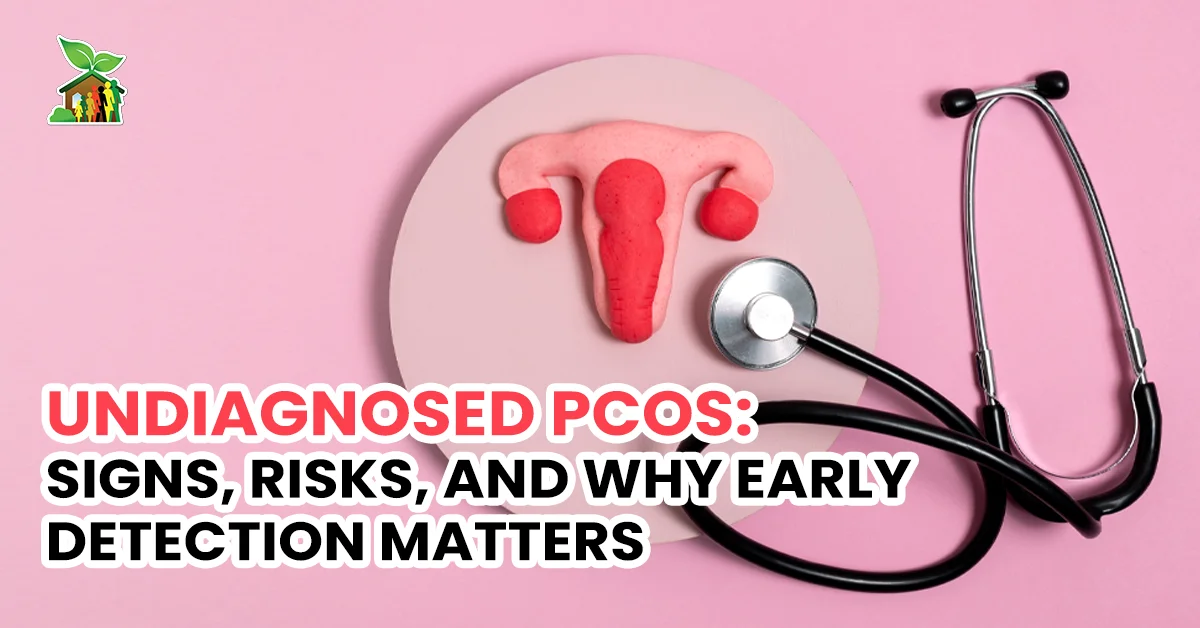
Undiagnosed PCOS: Signs, Risks, and Early Detection
Many women live with undiagnosed PCOS for years without realizing it. Symptoms may show up slowly, change over time, or are easy to dismiss.
Cycles might be irregular but not absent. Acne may come and go. Weight changes may be blamed on stress. Fertility concerns often appear much later. For many, it is then too late.
This is one reason undiagnosed PCOS remains so common. PCOS does not always look dramatic or obvious, especially in the early years.
According to the National Institutes of Health, PCOS presents with a wide range of hormonal and ovulatory patterns rather than a single, uniform presentation.
What Are Common PCOS Symptoms That Often Go Unnoticed?
When people think of PCOS symptoms, they often imagine extreme cases. In reality, PCOS symptoms can be mild, inconsistent, or easily explained away.
Common but overlooked PCOS symptoms include:
- Cycles that are slightly irregular but still monthly
- Acne that persists beyond the teen years
- Hair thinning or increased hair growth that develops slowly
- Weight changes that don’t respond well to diet changes
- Fatigue or blood sugar crashes
Why Do Some Women With PCOS Go Undiagnosed for Years?
There are several reasons undiagnosed PCOS is so widespread.
First, there is no single test that confirms PCOS. Diagnosis is based on patterns, not one lab value.
Second, many women are told their symptoms are “normal,” especially if they are young or still menstruating.
Third, PCOS symptoms often shift over time, making them harder to recognize early.
Research published through the National Center for Biotechnology Information notes that PCOS is frequently under-recognized, particularly in women who do not fit the classic presentation.
This contributes directly to missed PCOS diagnosis, especially when fertility is not yet a concern.
Can Blood Tests Alone Detect PCOS?
No. Blood tests alone do not fully capture PCOS.
Hormone panels can provide helpful information, but undiagnosed PCOS often persists because labs may appear “normal” at certain points in the cycle. PCOS involves fluctuating hormone signals, insulin response, and ovulation patterns.
This is why PCOS assessment relies on a combination of:
- Cycle history
- Ovulation patterns
- Hormone levels
- Metabolic markers
Can Someone Have PCOS Without Having Ovarian Cysts?
Yes. Despite the name, ovarian cysts are not required for PCOS. Evidence now shows how misplaced the term PolyCystic Ovarian Syndrome can be for so many.
Many women with undiagnosed PCOS never show cysts on ultrasound. Others may have cysts at one point and not another. PCOS is primarily a hormonal and metabolic condition, not a structural one.
NIH resources clarify that ovarian cysts are just one possible feature, not a defining requirement.
This misunderstanding alone explains why so many women experience missed PCOS diagnosis.
Is PCOS Inherited or Genetic?
Research suggests PCOS has a strong genetic component, though no single gene causes it.
Studies show that PCOS tends to run in families, particularly through the maternal line. Genetics influence how the body responds to insulin, how hormones are produced, and how ovulation is regulated.
However, genetics alone do not determine whether symptoms show up early or remain subtle. This helps explain why undiagnosed PCOS can look very different from one woman to another.
Is PCOS the Same as Infertility?
No. PCOS and infertility are not the same, even though they are often talked about together.
Large medical organizations, including the American Medical Association and the Centers for Disease Control and Prevention, consistently point out that PCOS is a lifelong hormonal condition, not a direct diagnosis of infertility. While PCOS is one of the more common causes of ovulatory disruption, it does not mean pregnancy is unlikely or impossible.
According to physician perspectives shared through the American Medical Association, many women with PCOS ovulate intermittently rather than not at all. Some conceive naturally without medical intervention, sometimes even before they realize they have PCOS. Others experience longer timeframes to conception, but still retain strong ovarian reserve and fertility potential well into their later reproductive years.
The confusion often comes from late recognition. When undiagnosed PCOS goes unaddressed for years, ovulation patterns may become less predictable over time. Metabolic factors like insulin resistance can also compound hormonal signaling, which may make fertility feel more complicated later than it needed to be.
Importantly, research and clinical observations note that women with PCOS often have a higher egg reserve compared to women without PCOS. This means fertility potential can extend longer, even if cycles are irregular. As physicians frequently emphasize, the ovaries themselves are usually healthy, the issue is the hormonal environment surrounding them.
What Are the Early Signs of PCOS That Are Often Overlooked?
One of the hardest parts about undiagnosed PCOS is that the early signs often don’t feel serious enough to raise alarms. Many women assume their symptoms are temporary, stress-related, or just part of life.
Some of the signs of PCOS most women miss include:
- Cycles that are “mostly regular” but vary by a week or more
- Periods that arrive monthly but feel unusually light or even unusually heavy
- Acne that persists into adulthood
- Hair thinning at the temples or crown
- Increased facial or body hair that develops gradually
- Sugar cravings or energy crashes after meals
None of these alone automatically point to PCOS. But when they show up together, especially over time, they can reflect underlying hormone and ovulation changes that often go unrecognized.
Research published through the NCBI explains that subtle ovulatory dysfunction is common in early or mild PCOS presentations, which is one reason missed PCOS diagnosis happens so frequently.
Why Fertility Concerns Often Appear Later With Undiagnosed PCOS
Many women don’t think about PCOS until fertility becomes a concern. This doesn’t mean PCOS suddenly appeared. It usually means undiagnosed PCOS was present for years but did not cause noticeable problems earlier on.
Ovulation may have been inconsistent rather than absent. Hormones may have been compensating. Cycles may have looked “normal enough.” Over time, those patterns can shift, especially with age, stress, or metabolic changes.
Until the need for fertility comes into view, many women are actually happy not to have a normal cycle and therefore don’t pursue “fixing” it.
This is why fertility and PCOS are so closely linked in research discussions. Fertility challenges are often the point where underlying patterns become harder to ignore.
Can Managing PCOS Early Improve Long-Term Fertility Outcomes?
Research funded by the NIH and conducted at The University of Toledo offers important insight into how insulin interacts with reproductive function.
According to Dr. Jennifer Hill, an associate professor of physiology and pharmacology, insulin is not only involved in blood sugar regulation, it also plays a critical role in allowing the brain to release reproductive hormones.
Dr. Hill explains that insulin is required for the brain to release gonadotropin-releasing hormone (GnRH), often referred to as the master hormone that drives reproduction. When insulin is lacking, or when the brain does not properly respond to insulin, the hormonal cycle can break down. In women, this disruption has been linked to irregular ovulation, which can make conception more difficult.
This research helps explain why insulin signaling is so often part of conversations around PCOS and fertility, even in women who are not diabetic. In PCOS, insulin resistance or impaired insulin signaling may disrupt the brain–ovary communication required for consistent ovulation.
When Is IVF Considered for Women With PCOS?
IVF is often misunderstood in the context of PCOS. It is not automatically required, and it is rarely the first option explored.
For many women, IVF enters the conversation only after ovulation remains inconsistent despite sustained efforts to support hormonal and metabolic balance.
Research published in the European Journal of Obstetrics & Gynecology and Reproductive Biology examined IVF outcomes in women with PCOS, women with polycystic ovarian morphology (PCO), and women with normal ovaries. The study found that while women with PCOS and PCO had a higher risk of ovarian hyperstimulation syndrome (OHSS), live birth rates per cycle were similar across all groups.
To me, this matters because it shifts the conversation away from fear. PCOS doesn’t automatically mean poor fertility outcomes. It means care needs to be thoughtful. Protocols need to be adjusted. The body needs to be understood, not rushed. It means considering insulin resistance and how that affects areas of your life and trying exercise and the Mediterranean Diet, for example, instead of the high cost and emotional stress of IVF.
This is also why early awareness matters so much. When PCOS patterns are recognized earlier, there is often more room to support ovulation and hormone balance before IVF ever becomes necessary. Taking an active role in your fertility and health journey leads to being better prepared and having more realistic expectations.
Where Natural Support Often Fits in Early PCOS Patterns
When PCOS is identified earlier, many women focus on supporting hormone balance and metabolic stability before fertility becomes urgent.
For example:
- Fertile Balance is often used by women paying attention to cycle regularity and progesterone balance.
- Berberine Complex is frequently discussed in research related to insulin signaling and metabolic health.
- Blood Sugar Complex for balancing blood sugar and naturally / herbally supporting insulin resistance.
- DIM 150 and Chrysin Plus DIM are commonly used by those focusing on estrogen metabolism and androgen balance.
Why Listening to Early Signals Matters
When it comes to PCOS, the body often starts communicating long before anything is officially named. Subtle cycle changes, inconsistent ovulation, skin or hair shifts, or metabolic patterns are easy to overlook, especially when life is busy, and symptoms don’t feel severe.
Listening to early signals isn’t about assuming something is wrong. It’s about paying attention to patterns over time. When those patterns are noticed earlier, there is more room to think clearly, explore options calmly, and support the body before fertility concerns feel urgent or overwhelming.
For women who want to take a thoughtful, natural approach, early awareness often opens the door to supportive choices that align with how the body functions. Whole Family Products offers options that many women use as part of this process, including Fertile Balance, DIM 150, Chrysin Plus DIM, and Berberine Complex, depending on individual patterns and areas of focus.
If you have concerns about medications that may interact with supplements, consider discussing your plans with a trusted holistic provider who understands your full health picture.
Paying attention early doesn’t require having all the answers; it simply creates space for informed, steady steps forward.